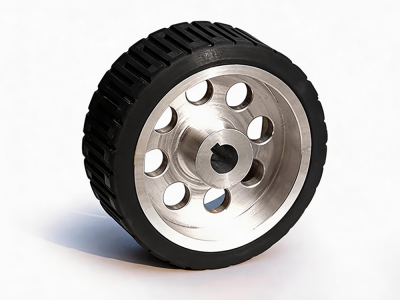
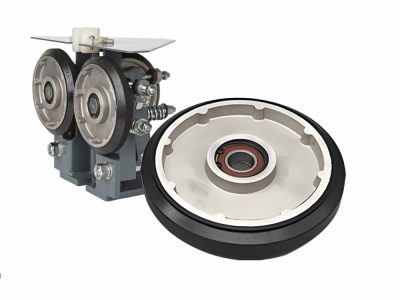
Rubot Rubber
Basic Features:Lightweight design, strong traction, anti-slip protection, wear resistance, ultra-quiet operation, environmental friendliness
Customized: Offer Solution and Production Service for your specific requirements
Home ⇒ Products ⇒ Robot Rubber
Robot Rubber: The Core Material Powering Next-Generation Robotics
In today’s rapidly evolving robotics industry, material selection plays a decisive role in performance, durability, and precision. Among the most critical materials is Robot Rubber, a specialized elastomer engineered to meet the demanding requirements of robotic systems. From humanoid robots to industrial automation arms, Robot Rubber enables smooth motion, shock absorption, and long-term reliability.
Ginotek, as a professional foreign trade manufacturer, focuses on delivering high-performance Robot Rubber solutions tailored for robotic hands, feet, necks, and joint systems. Each application requires a unique balance of elasticity, strength, and resistance, making customization essential.
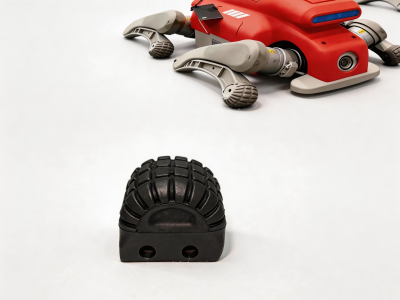
Foot of Robot Dog
Key Feature
Anti slip, shock-absorbing, impact resistant, wear-resistant, dare not interfere with sensors
Application
Robot Feet: Stability and Impact Resistance
Robot feet endure constant contact with the ground, requiring enhanced durability.
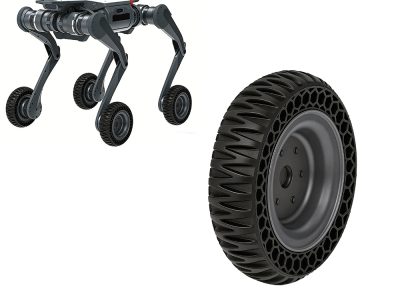
Key Feature
Anti-slip Protection, Wear Resistance, Strong traction
Application
Robot Foot Whool
1. Soft Robotics
Rubber is one of the core materials used in soft robotics.
Common Materials:
- Silicone Rubber
- Elastomers
Key Characteristics:
- High elasticity with large deformation capability
- Ability to mimic biological tissues (such as octopus tentacles and muscles)
Typical Applications:
- Medical robots (minimally invasive surgical tools)
- Biomimetic robots (soft crawling and gripping systems)
Advantages: High safety, making it suitable for human interaction
2. Robot Grippers
Rubber is widely used in robotic end-effectors.
Application Forms:
- Rubber-coated gripper jaws
- Flexible suction pads (vacuum cups)
Advantages:
- Increased friction and anti-slip performance
- Ability to handle fragile objects (such as glass and food)
Common Scenarios:
- Automated production lines
- Food sorting robots
3. Sealing & Protection
Robots require protection against dust, water, and harsh environments.
Rubber Components:
- Sealing rings (O-rings)
- Waterproof gaskets
Application Scenarios:
- Industrial robots (harsh environments)
- Outdoor inspection robots
- Underwater robots
Note: Critical for achieving IP-rated protection
4. Damping & Shock Absorption
Rubber provides excellent damping performance.
Applications:
- Robot base shock-absorbing pads
- Motor and joint buffering components
Functions:
- Reduce vibration
- Improve precision and stability
- Extend equipment lifespan
5. Mobility Systems
In mobile robots, rubber is used for:
- Wheels of wheeled robots
- Outer layers of tracked robots
Features:
- Provides strong traction
- Adapts to complex terrains (sand, mud, etc.)
6. Human-Robot Interaction (HRI)
In collaborative robots (cobots), rubber plays an important role:
Applications:
- Rubber outer coverings
- Soft cushioning structures
Functions:
- Reduce collision impact and injuries
- Improve tactile experience (skin-like touch)
7. Sensors & Smart Materials
Rubber is also used in flexible sensing technologies.
Types:
- Conductive rubber
- Pressure and tactile sensors
Applications:
- Robotic “sense of touch”
- Force feedback systems
Ginotek Advantages:
Ginotek stands out in the global market by combining advanced technology with strict quality control. The company’s expertise in Robot Rubber manufacturing ensures reliable and consistent products.
Advanced Material Formulation
Ginotek develops specialized rubber compounds tailored to each robotic application, ensuring optimal performance in every component.
Precision Production Processes
From rubber mixing and internal kneading to vulcanization, every stage is carefully controlled to achieve uniform quality and performance.
Strict Quality Control System
Quality starts from raw materials. Ginotek implements rigorous inspection standards to ensure that each batch of Robot Rubber meets international requirements.
Customization Capability
Understanding that no two robotic systems are identical, Ginotek offers flexible customization to meet specific design and functional needs.
Future Trends of Robot Rubber in Robotics
As robotics continues to evolve, the demand for advanced materials like Robot Rubber is growing rapidly. Future developments are expected to focus on:
- Smart elastomers with embedded sensing capabilities
- Lightweight materials for energy-efficient robots
- Enhanced durability for extended operational cycles
Robot Rubber will play a central role in enabling robots to become more human-like, efficient, and adaptable across industries.
Robot Rubber is a foundational material in modern robotics, enabling precision, durability, and adaptability across various components. From robotic hands requiring delicate touch to joints enduring intense mechanical stress, each application demands a carefully engineered solution.
Ginotek leverages its expertise in material science and manufacturing to provide high-quality Robot Rubber tailored to diverse robotic needs. By focusing on innovation, customization, and strict quality control, Ginotek is well-positioned to support the future of robotics.
Classification of Rubber Wheels