Natural Rubber Advantages And Disadvantages D006
Natural Rubber Advantages And Disadvantages:
In the industrial rubber sector, selecting the right material is essential for ensuring performance, durability, and cost-efficiency. Among the most widely used materials, natural rubber continues to hold a strong position despite the availability of synthetic alternatives. Understanding the Natural Rubber Advantages And Disadvantages helps manufacturers make informed decisions based on application requirements and environmental conditions.
Keep in touch with us!
Natural Rubber Advantages
1. Exceptional Elasticity
One of the most significant Natural Rubber Advantages /Disadvantages discussions starts with elasticity. Natural rubber can stretch up to several times its original length and return to its initial shape without deformation. This makes it ideal for dynamic applications requiring flexibility and repeated motion.
2. High Mechanical Strength
Natural rubber exhibits excellent tensile strength and tear resistance. It performs well under heavy loads and continuous stress, making it suitable for industrial components such as mounts, seals, and shock absorbers.
3. Superior Vibration Damping
Another key factor in Natural Rubber Advantages/ Disadvantages is its ability to absorb vibration. Natural rubber effectively reduces noise and mechanical shock, protecting machinery and enhancing operational stability in industrial environments.
4. Good Abrasion Resistance
Natural rubber performs well in applications where friction and wear are common. This makes it a reliable choice for conveyor belts, flooring mats, and protective components.
5. Eco-Friendly Material
As a renewable resource, nature rubber supports sustainability initiatives. It is biodegradable and has a lower environmental impact compared to synthetic rubber, which relies on fossil fuels.
Natural Rubber Disadvantages
1. Limited Heat Resistance
When evaluating Nature Rubber Advantages/ Disadvantages, one limitation is its relatively poor performance at high temperatures. Prolonged exposure to heat can cause degradation, reducing elasticity and strength.
2. Poor Oil and Chemical Resistance
Natural rubber is not suitable for environments exposed to oils, fuels, or certain chemicals. It can swell, degrade, or lose mechanical integrity when in contact with these substances.
3. Susceptibility to Ozone and UV
Natural rubber can deteriorate when exposed to ozone, sunlight, and harsh weather conditions. Without proper additives or protective measures, cracking and aging may occur over time.
4. Variability in Raw Material
Since natural rubber is derived from biological sources, its properties can vary depending on climate, harvesting conditions, and processing methods. This variability requires strict quality control during manufacturing.
Functional Applications in Industry
Despite its limitations, the Natural Rubber Advantages /Disadvantages balance still favors its use in many industries:
- Vibration Isolation Products: Engine mounts, anti-vibration pads, and machinery supports rely on its elasticity and damping capabilities.
- Automotive Components: Bushings, seals, and suspension parts benefit from its strength and flexibility.
- Industrial Equipment: Rubber linings, gaskets, and shock absorbers use natural rubber for durability and performance.
- Construction Applications: Bridge bearings and expansion joints take advantage of its load-bearing and movement capabilities.
These applications highlight how manufacturers leverage its strengths while managing its limitations through design and material selection.
Manufacturing Process of Natural Rubber Products
To fully utilize Natural Rubber Advantages And Disadvantages, manufacturers follow a precise production process:
1. Raw Material Processing
Latex is collected and processed into solid rubber forms such as sheets or blocks. Maintaining purity and consistency at this stage is crucial.
2. Compounding
Natural rubber is mixed with reinforcing agents, antioxidants, and curing chemicals. This step enhances performance characteristics such as durability, aging resistance, and thermal stability.
3. Molding Techniques
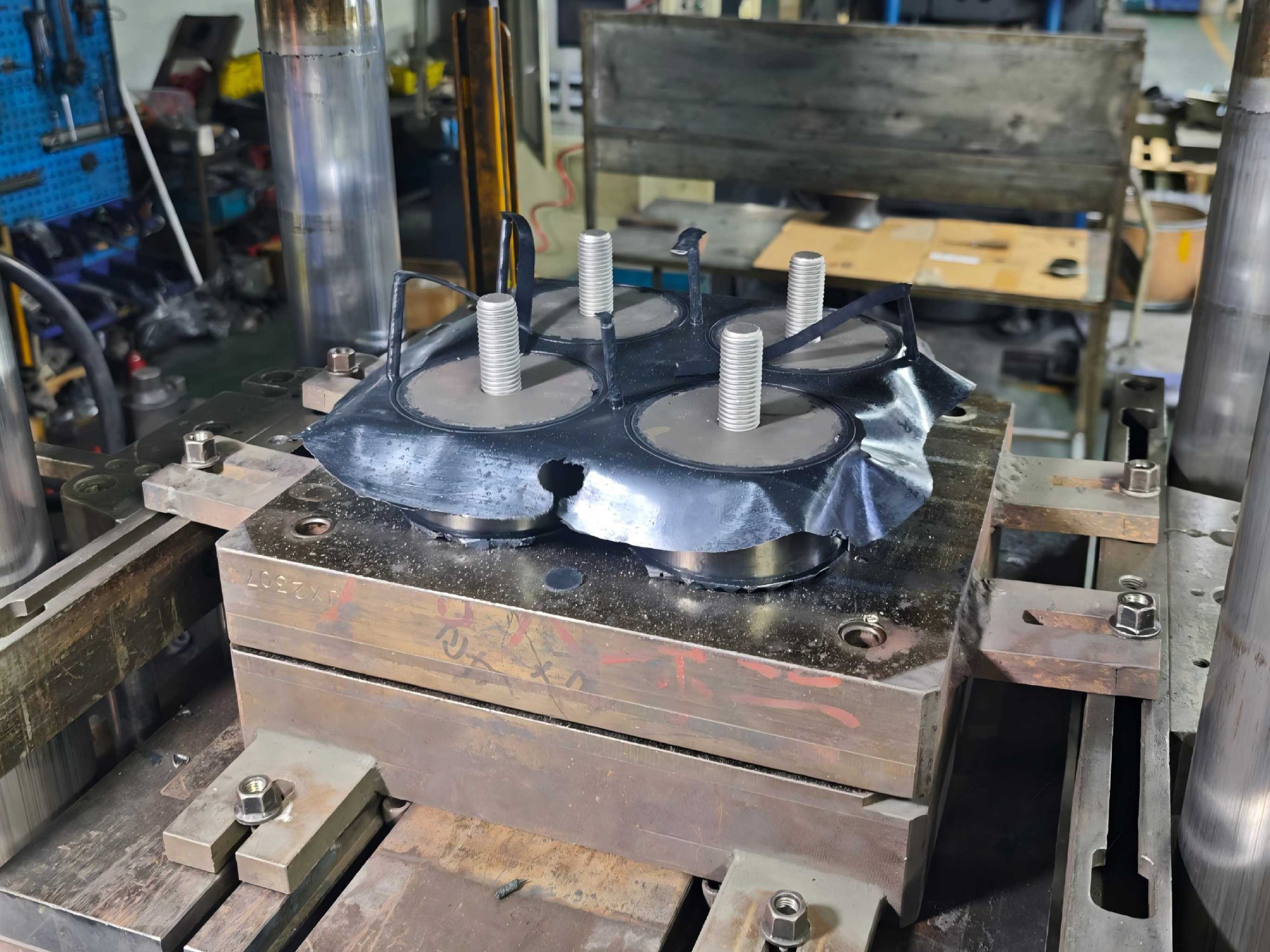
Depending on the product design, rubber is shaped using compression molding, injection molding, or transfer molding. Each method ensures precision and consistency.
4. Vulcanization
Vulcanization is a heat-curing process that strengthens the rubber by forming cross-linked molecular structures. This significantly improves elasticity, strength, and resistance to wear.
5. Quality Control
Advanced testing ensures products meet strict standards for hardness, tensile strength, elongation, and environmental resistance. This is essential to balance the Natural Rubber Advantages/Disadvantages in real-world applications.
Understanding the Natural Rubber Advantages/ Disadvantages is key to selecting the right material for industrial applications. While natural rubber excels in elasticity, strength, and vibration damping, it requires careful consideration in environments involving heat, chemicals, or UV exposure.
For manufacturers, the goal is not simply to choose between natural and synthetic rubber, but to match the material to the application. With proper formulation, design, and quality control, natural rubber remains a highly effective and competitive solution in modern industry.
Why Synthetic Rubber Outperforms Natural Rubber in Industrial Applications
In modern industry, material performance directly determines product reliability, safety, and lifespan. While Natural Rubber has long been valued for its excellent elasticity and resilience, it cannot fully meet the increasingly complex demands of today’s industrial environments. This is where synthetic rubber stands out—engineered through advanced Polymerization processes, it delivers superior, customizable performance that consistently outperforms natural rubber in critical applications.
1. Superior Environmental Resistance
Natural rubber is highly sensitive to environmental factors such as oxygen, ozone, UV radiation, and temperature fluctuations. Over time, these elements cause cracking, hardening, and degradation.
Synthetic rubber, however, is specifically designed to withstand harsh conditions:
-
Excellent resistance to ozone and UV exposure
-
Stable performance under extreme temperatures
-
Enhanced weatherability for long-term outdoor use
This makes synthetic rubber the preferred choice for outdoor infrastructure, automotive components, and construction sealing systems where durability is essential.
2. Outstanding Oil and Chemical Resistance
One of the most significant limitations of natural rubber is its poor resistance to oils, fuels, and chemicals. Exposure often leads to swelling, softening, and eventual failure.
Synthetic rubber solves this problem through tailored formulations:
-
Nitrile rubber (NBR) offers exceptional oil resistance
-
Fluoroelastomers provide superior chemical stability
-
Specialized compounds resist acids, solvents, and industrial fluids
These properties are critical in industries such as automotive, petrochemical, and heavy machinery, where material failure is not an option.
3. Consistent Quality and Predictable Performance
Natural rubber is derived from the Hevea brasiliensis, making it vulnerable to variations in climate, geography, and harvesting conditions. This results in inconsistent material properties and batch-to-batch variability.
Synthetic rubber, by contrast, is manufactured under controlled industrial conditions:
-
Uniform molecular structure
-
Stable mechanical properties
-
Reliable batch consistency
For precision applications—such as vibration isolation systems and engineered rubber components—this consistency ensures predictable and repeatable performance.
4. Customizable Material Properties
Natural rubber offers excellent elasticity but limited flexibility in terms of performance modification.
Synthetic rubber transforms this limitation into a strength. Through formulation design and controlled Vulcanization, manufacturers can tailor materials to meet exact requirements:
-
Specific hardness (Shore A)
-
Controlled damping and vibration absorption
-
Improved tensile strength and abrasion resistance
-
Optimized compression set and lifespan
This ability to engineer materials based on application needs makes synthetic rubber indispensable in modern industrial design.
5. Performance in Extreme Conditions
Industrial environments often involve extreme temperatures, pressures, and chemical exposure—conditions where natural rubber struggles.
Synthetic rubber excels in these scenarios:
-
Silicone rubber performs from -60°C to over 200°C
-
Fluorocarbon rubber withstands aggressive chemicals and fuels
-
Advanced elastomers maintain integrity under high mechanical stress
These capabilities open the door to high-performance applications in aerospace, energy, and advanced manufacturing sectors.
6. Enhanced Functional Capabilities
Beyond basic mechanical performance, synthetic rubber enables the development of functional materials that natural rubber cannot achieve:
-
Flame-retardant rubber for safety-critical systems
-
Conductive rubber for electronics and EMI shielding
-
Food-grade and medical-grade elastomers
-
Low-permeability materials for sealing applications
This evolution turns rubber from a simple elastic material into a multifunctional engineering solution.
7. Stable Supply and Scalable Production
Natural rubber supply depends heavily on agricultural production, which is influenced by weather conditions, plant diseases, and geopolitical factors. This leads to price volatility and supply uncertainty.
Synthetic rubber, produced from petrochemical feedstocks, offers:
-
Stable global supply chains
-
Scalable production capacity
-
More predictable pricing
For large-scale industries such as automotive and industrial manufacturing, this reliability is crucial for long-term planning and cost control.