Rubber formula revealed: How to make rubber more wear-resistant and heat-resistant? Top 10
Rubber formula revealed: How to make rubber more wear-resistant and heat-resistant?
The performance of rubber products, such as wear resistance and high temperature resistance, directly depends on their formula design. By scientifically adjusting the base material, vulcanization system, reinforcement filling system, and protective system, the service life of rubber in harsh environments can be significantly improved. The following are key formula optimization strategies:
1. Customize Rubber formula for he cornerstone of performance
Wear resistance priority: Polyurethane rubber has far superior wear resistance compared to other materials, exhibiting excellent performance at room temperature, but its performance will sharply decrease at high temperatures. Chlorosulfonated polyethylene rubber can maintain good wear resistance in high temperature environments and is suitable for dynamic sealing applications.
High temperature resistance strengthening: Fluororubber (FKM), with its stable C-F bond structure, can withstand high temperatures up to 250 ° C, making it an ideal choice for high-temperature seals. Silicone rubber (VMQ) works stably within the range of -50 ° C to 230 ° C, but requires reinforcement of mechanical strength through fillers.
2. Sulfurization system: Crosslinking determines durability
Wear resistance optimization: The degree of vulcanization needs to be precisely controlled. If the crosslinking density is too high, it will cause the material to harden, while if it is too low, it is prone to wear. Nitrile rubber adopts a low-sulfur and high-vulcanization-promoting system to reduce compression set and improve dynamic wear resistance.
High temperature resistance improvement: Peroxide vulcanization (such as DCP) can form more stable C-C cross-linking bonds, allowing rubber to maintain elasticity above 150 ° C, significantly better than traditional sulfur vulcanization.
3. Reinforcement filling system: balancing performance and cost
Wear resistance enhancement: Carbon black is the preferred reinforcing agent, and the smaller the particle size and the larger the dosage, the more significant the improvement in wear resistance. However, excessive filling can damage processability and needs to be combined with semi-reinforced carbon black to balance elasticity and cost.
High temperature resistant auxiliary: Thermal conductive fillers such as carbon nanotubes can quickly dissipate heat, reduce degradation caused by local high temperatures, and extend the life of rubber in hot environments.
4. Protection system: resist environmental erosion from Rubber formula solution
Antioxidant combination: The main antioxidant (such as hindered phenol) directly neutralizes free radicals, while the auxiliary antioxidant (such as hypophosphite) decomposes peroxides, providing dual protection and delaying aging.
Ozone prevention design: Protective wax (such as 254 wax) forms a protective layer on the rubber surface, with a dosage of ≥ 0.8 parts to ensure effective ozone prevention while also considering appearance requirements.
5. Process control: Details determine success or failure
Uniformity of mixing: Uneven dispersion of fillers can lead to local “hot spots” and accelerate aging. It is recommended to control the mixing temperature between 110-125 ° C and thin it at least 6 times.
Secondary Vulcanization and Formula Optimization of Rubber Products
Secondary vulcanization, also known as post-vulcanization, is a critical post-processing step in the rubber manufacturing process that plays an indispensable role in enhancing the overall performance and service life of rubber products. Such a rigorous thermal treatment is designed to achieve multiple key objectives: first, it can thoroughly eliminate residual volatile impurities, low-molecular-weight by-products, and unreacted curing agents that may remain in the rubber matrix after the initial vulcanization stage. The removal of these unwanted substances not only improves the purity and structural integrity of the rubber but also effectively prevents potential performance degradation caused by the volatilization or decomposition of impurities during subsequent service.
Moreover, secondary vulcanization further promotes the cross-linking reaction of the rubber molecular chains, optimizing the cross-linking density and uniformity of the material. As a direct result of these improvements, the heat-resistant life of the rubber products can be significantly extended by up to 50%, enabling them to maintain stable physical and mechanical properties even when exposed to long-term high-temperature environments.
Ginotek Patent Rubber Formula - Global firsst-class Technology
By optimizing the type and dosage of each component, the rubber matrix can be endowed with enhanced resistance to high temperatures, oxidation, ozone, and dynamic friction. Specifically, the optimized formula enables the rubber products to resist thermal aging, avoid excessive softening, hardening, or cracking under high-temperature conditions, and maintain excellent elasticity and sealing performance even during continuous dynamic friction operations.
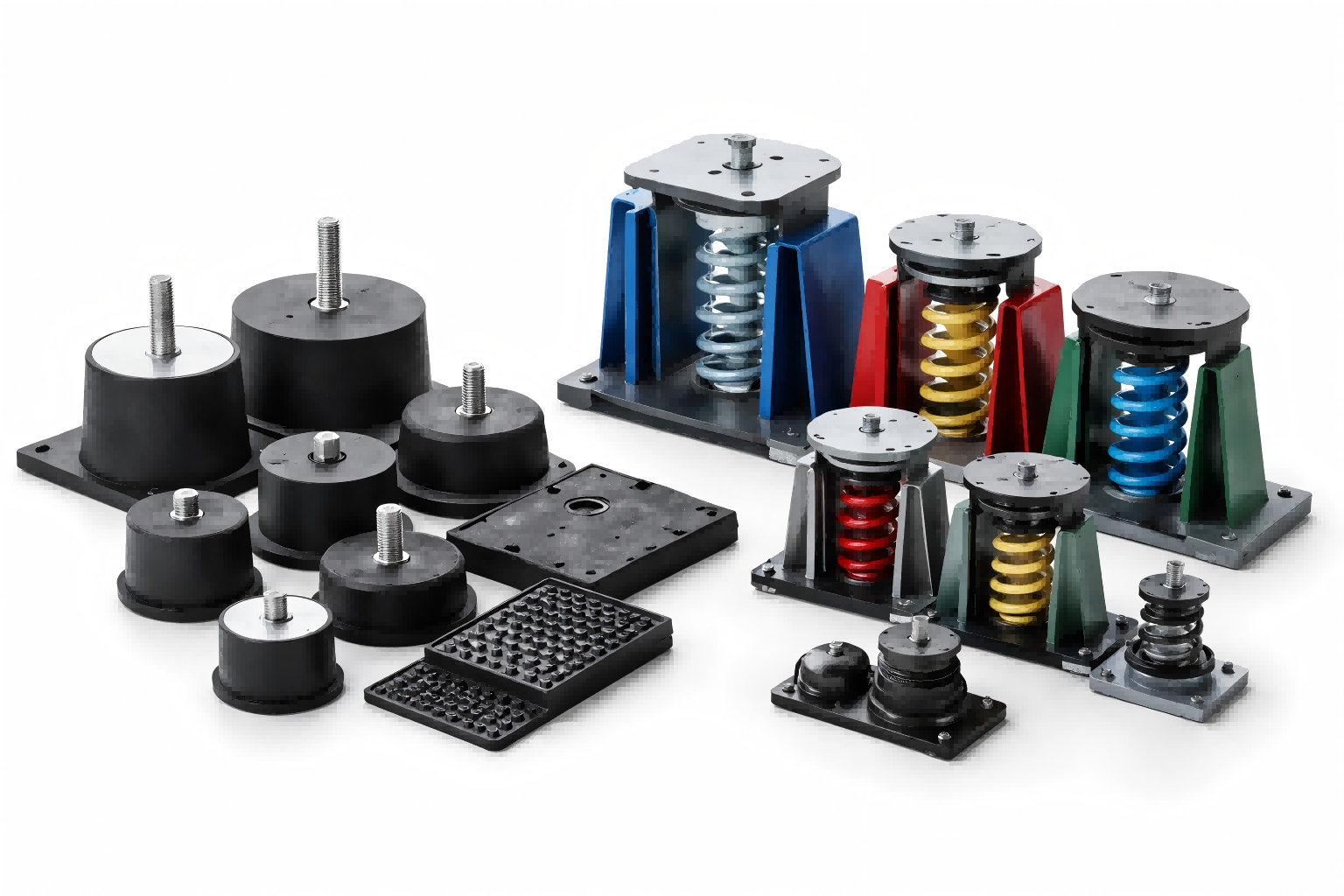
Rubber Products with Own Rubber formula
These enhanced performance characteristics make the rubber products highly adaptable to a variety of harsh working environments, such as the high-temperature zones in industrial boilers, the dynamic friction interfaces in mechanical transmission systems, and the harsh under-hood environments of automobiles.
Natural Rubber Chemical Formula
Rubber formula revealed
Chemical Formula Of Natural Rubber
Consequently, these high-performance rubber products can fully meet the long-term and high-reliability requirements of key application fields, including industrial sealing (such as seals for high-pressure and high-temperature pipelines, valves, and reactors), automotive parts (such as engine gaskets, O-rings, and shock absorbers), aerospace components, and electronic equipment sealing. In these fields, the stable performance of rubber products directly affects the operational efficiency, safety, and service life of the entire equipment, highlighting the practical significance of secondary vulcanization and formula optimization in rubber manufacturing.