
Scientific Shock Absorption Solutions since 1989
Leading one-stop Manufacture in China
self-owned industrial park: 60000 square meters
// Rubber Knowledge //


Industrial Rubber Knowledge and Vibration Control Solution
If you want to know about the classification of rubber and the characteristics of each material, if you want to know the ultimate temperature, if you want to make your design more effective in controlling the hardness and deformation of rubber, please read more of our articles or contact us directly
Rubber knowledge is the foundation of producing reliable industrial rubber products and providing effective solutions for different applications. As an export-oriented industrial rubber manufacturer, understanding the properties, classifications, processing methods, and performance standards of rubber materials is essential. Rubber is not a single material, but a broad category that includes various natural and synthetic compounds, each designed to perform under specific working conditions.
Industrial rubber is widely used in manufacturing, construction, mining, transportation, energy, and many other industries. Its popularity comes from its unique physical properties, such as elasticity, flexibility, shock absorption, sealing capability, and resistance to wear. However, the performance of rubber products depends heavily on material selection, formulation design, and production control. This is where professional rubber knowledge plays a critical role.
Natural rubber is known for its excellent elasticity, tensile strength, and resilience. It is commonly used in applications requiring high flexibility and good abrasion resistance. Synthetic rubbers, on the other hand, are engineered to provide specific advantages. For example, NBR (nitrile rubber) offers strong oil and fuel resistance, making it suitable for seals and gaskets in machinery. EPDM rubber provides excellent resistance to weather, ozone, and aging, which is ideal for outdoor applications. Silicone rubber performs well under high and low temperatures, while SBR is often used for general-purpose industrial products due to its cost-effectiveness.
Hardness is one of the most important parameters in rubber knowledge. Measured in Shore A or Shore D, hardness affects flexibility, load-bearing capacity, and sealing performance. Softer rubber provides better sealing and vibration absorption, while harder rubber offers improved wear resistance and structural stability. Selecting the correct hardness ensures the rubber product functions efficiently without premature failure.
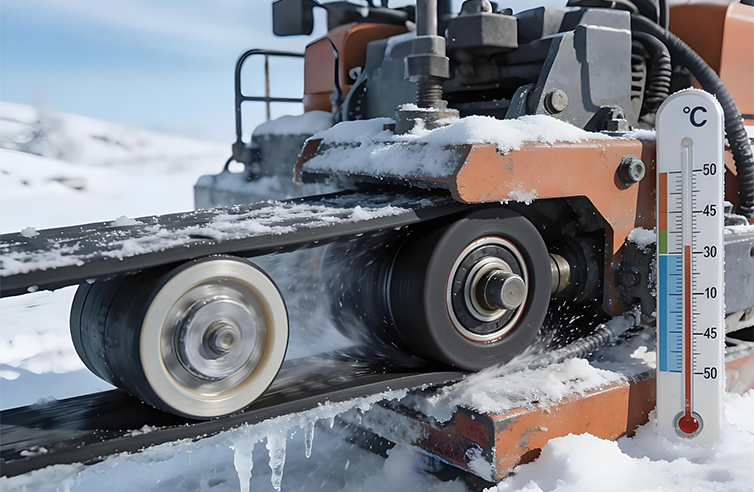
Another key aspect of rubber knowledge is understanding environmental resistance. Industrial rubber products may be exposed to oil, chemicals, heat, cold, UV radiation, or continuous mechanical stress. Each rubber compound responds differently to these factors. For instance, oil-resistant rubber is essential for hydraulic systems, while heat-resistant rubber is required for high-temperature industrial processes. Accurate evaluation of the working environment allows manufacturers to recommend the most suitable material and formulation.
Rubber processing methods also require specialized knowledge. Common techniques include compression molding, injection molding, extrusion, and calendering. Each process influences product shape, surface quality, dimensional accuracy, and production efficiency. Proper control of temperature, pressure, and curing time is necessary to achieve consistent performance. Poor processing can lead to defects such as bubbles, cracks, or uneven hardness, which reduce product lifespan.
Quality standards and testing are another important part of rubber knowledge. Industrial rubber products are often tested for tensile strength, elongation, abrasion resistance, compression set, and aging performance. These tests ensure that products meet customer specifications and international standards. A stable quality control system helps maintain consistency across production batches and builds trust with global customers.
Customization is increasingly important in the industrial rubber market. Many applications require non-standard sizes, shapes, or performance characteristics. Rubber knowledge allows manufacturers to adjust formulations, molds, and production processes to meet specific customer needs. This technical flexibility is especially valuable for export customers facing diverse operating conditions and regulatory requirements.
In conclusion, rubber knowledge is not only about materials, but also about application understanding, process control, and quality management. It connects raw materials to real-world performance and transforms rubber compounds into reliable industrial products. For an industrial rubber export factory, strong rubber knowledge ensures product reliability, customer satisfaction, and long-term cooperation. By continuously improving technical expertise and staying aligned with market demands, manufacturers can provide dependable rubber solutions that support industries worldwide.