For industrial rubber export factories, equipment is not just a production tool—it is the core foundation supporting product quality, delivery reliability, and global competitiveness. Industrial rubber products (such as compound rubber, seals, vibration isolation components, rubber sheets, rollers, and custom-molded parts) require extremely high standards in formulation, vulcanization, pressure, temperature, and dimensional accuracy. The rationality of equipment design and the effectiveness of daily maintenance directly determine production efficiency and quality consistency, ultimately impacting order fulfillment, customer certification, and long-term partnerships.
I. Critical Importance to Production Efficiency
1. Stable Capacity Ensures On-Time Delivery
Continuous and stable operation of internal mixers, open mills, extruders, vulcanizing presses, and injection machines is the foundation for handling large-scale orders and meeting delivery timelines.
Equipment breakdowns or frequent maintenance interruptions can lead to capacity shortages, making it difficult to meet overseas customers’ lead time (L/T) requirements, potentially resulting in contract penalties, costly air shipments, or even order loss.
2. Reduced Downtime and Faster Changeovers Increase Output
Well-designed equipment (with automation, quick mold change systems, precise temperature control, and integrated production lines) significantly reduces auxiliary time.
Standardized maintenance minimizes unexpected failures, reduces waiting time for materials or repairs, and lowers rework rates, thereby improving Overall Equipment Effectiveness (OEE).
3. Lower Energy and Material Waste
Aging equipment, air leakage, or inaccurate temperature control can cause excessive steam or electricity consumption, rubber scorching, and under- or over-vulcanization scrap.
Energy-efficient design and refined maintenance directly reduce unit production costs and enhance price competitiveness in international markets.
4. Supports Scaling and Automation Upgrades
Export orders typically involve large volumes and diverse specifications. Standardized and modular equipment design allows for rapid product switching.
A well-established maintenance system is essential to support automated production lines, including automatic batching, vulcanization, and inspection.
II. Decisive Role in Product Quality Stability
For industrial rubber exports, consistency in performance, dimensional accuracy, appearance, and batch stability is critical. Equipment serves as the first line of defense for quality assurance.
1. Ensuring Stability of Vulcanization Parameters: Temperature, Pressure, and Time
Even slight deviations—such as ±2°C temperature fluctuation, uneven pressure, or timing inconsistencies—can lead to:
Non-compliance in hardness, tensile strength, elongation, and compression set
Defects such as under-curing, over-curing, air bubbles, short shots, or excessive flash
Only precise equipment design and proper maintenance can ensure consistent performance across every mold and batch, meeting international standards such as ASTM, DIN, ISO, and JIS.
2. Ensuring Uniform Mixing—The Foundation of Rubber Performance
The rotor design, temperature control, and rotational stability of internal mixers and open mills directly affect compound uniformity.
Poor mixing results in inconsistent hardness, high performance variability, surface defects, and inadequate aging resistance—leading to failure in incoming inspections and type testing by overseas clients.
3. Ensuring Dimensional Accuracy and Appearance Quality
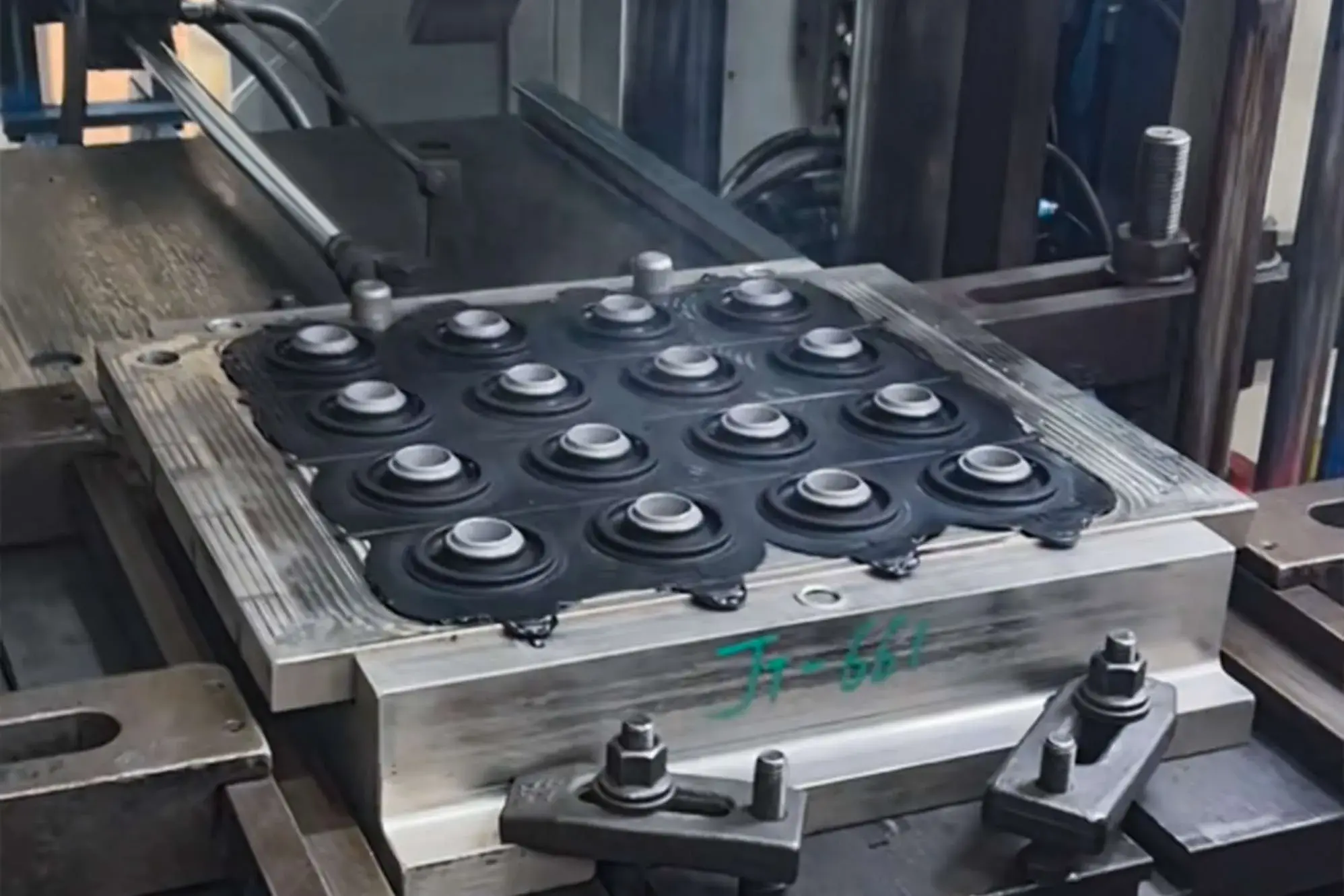
Mold temperature control, clamping precision, ejection systems, and injection flow stability directly determine product tolerances.
Export customers—especially in automotive, machinery, hydraulics, and rail transit industries—have strict tolerance requirements. Unstable equipment can result in large-scale defects, returns, and compensation claims.
4. Reducing Batch Variability and Meeting Traceability Requirements
Overseas customers, particularly in Europe, the U.S., and Japan, emphasize traceability, CPK, and SPC stability.
Only with controlled equipment conditions and recordable, repeatable production parameters can factories pass audits such as IATF and ISO, and maintain long-term inclusion in global supply chains.


Reviews
There are no reviews yet.