1. Structural Advantages of Cylindrical Geometry
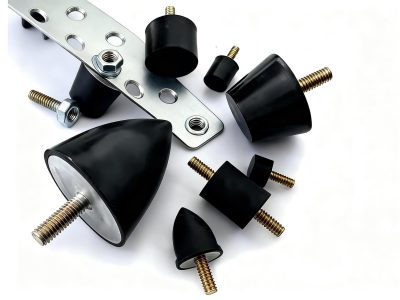
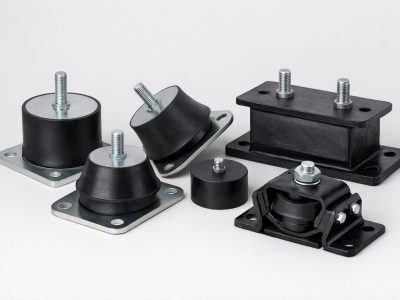
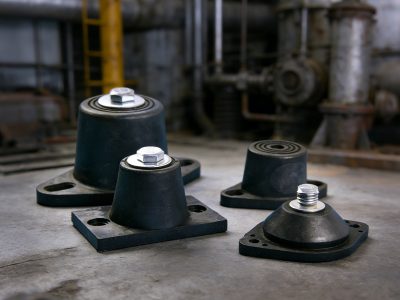
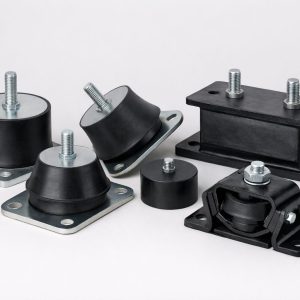
The Cylindrical Shock Mounts shape offers balanced load distribution and uniform deformation under compression and shear. This geometry allows shock mounts to absorb energy efficiently while maintaining structural stability.
By adjusting diameter, height, and rubber thickness, engineers can precisely control stiffness and damping performance. Cylindrical structures also minimize stress concentration, improving fatigue resistance under repeated dynamic loads.
2. Load-Oriented Design Engineering
Effective shock isolation depends on accurate load analysis. Cylindrical shock mounts are designed according to static load, dynamic shock intensity, and vibration frequency specific to the application.
Compression-only designs are suitable for vertical loads, while combined compression and shear structures accommodate multi-directional movement. Proper design ensures the rubber operates within its optimal elastic range, reducing stress, enhancing energy absorption, improving stability, and extending service life under repeated shock conditions.
3. Rubber Material Selection for Durability
Material selection directly affects performance and lifespan. Natural rubber offers excellent elasticity and energy absorption, making it ideal for general shock isolation. Synthetic compounds such as EPDM and NBR provide improved resistance to heat, oil, and environmental aging.
Rubber compounds are formulated by carefully controlling hardness, filler content, and curing agents to deliver consistent mechanical properties throughout long-term operation. This ensures stable elasticity, predictable damping behavior, resistance to aging, and reliable performance under varying loads, temperatures, and continuous vibration conditions.
4. Precision Mold Design and Tooling Control
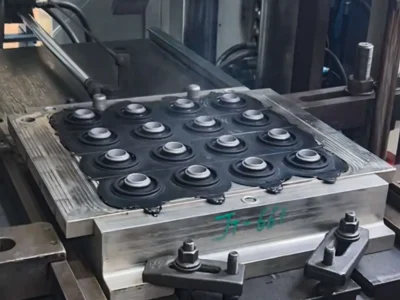
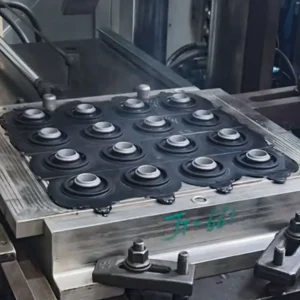
High-quality molds are essential for producing consistent cylindrical geometry. Mold design considers rubber flow, venting efficiency, and shrinkage behavior during curing.
Precision tooling ensures uniform wall thickness and dimensional accuracy, reducing internal stress and enhancing fatigue life in high-cycle applications.
5. Rubber-to-Metal Bonding Integration
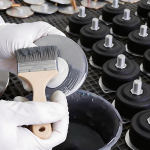
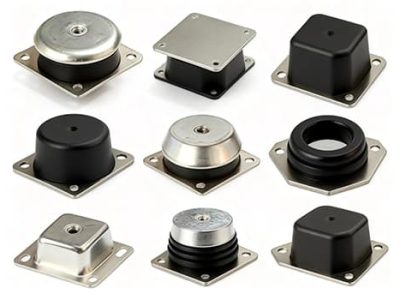
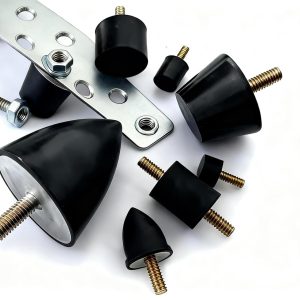
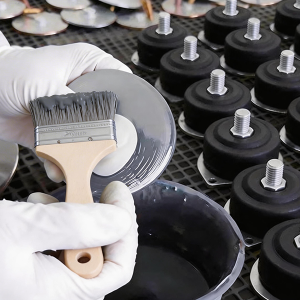
Many cylindrical shock mounts incorporate metal studs or plates for mounting and load transfer. Reliable rubber-to-metal bonding is achieved through surface preparation, adhesive systems, and controlled vulcanization.
Strong bonding between rubber and metal or between different rubber layers prevents separation under repeated shock, vibration, and cyclic loading, ensuring safe, reliable, and long-lasting performance even in demanding industrial and high-load applications.
6. Controlled Vulcanization and Manufacturing Process
Vulcanization defines the final elasticity, tensile strength, and damping characteristics of rubber. Temperature, pressure, and curing time are strictly controlled to meet design specifications.
Stable manufacturing processes ensure predictable shock absorption performance, uniform material properties, and dimensional accuracy, delivering consistent quality across production batches. This minimizes variability, reduces maintenance issues, and guarantees reliable, long-term performance in demanding industrial applications.
7. Quality Inspection and Performance Validation
Quality control is integrated throughout production. Dimensional inspection, hardness testing, and bonding strength evaluation verify compliance with technical requirements.
For critical applications, shock and fatigue testing validate real-world performance. This ensures cylindrical shock mounts deliver reliable protection under demanding operating conditions.



Reviews
There are no reviews yet.