1. Engineering-Oriented Product Structure Design
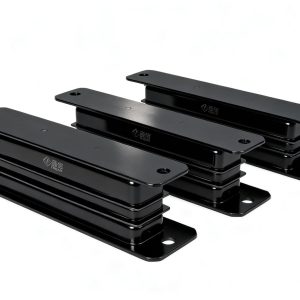
Effective rubber components start with engineering analysis rather than tooling. Load conditions, vibration frequency, installation direction, and environmental exposure are evaluated at the design stage.
Structural design focuses on deformation mode selection—compression, shear, or combined loading—to ensure the rubber works within its optimal elastic range. Proper geometry reduces stress concentration and improves fatigue life under continuous vibration.
2. Rubber Material Selection Based on Application Needs
Material performance directly impacts durability and vibration isolation efficiency. Natural rubber provides excellent elasticity and fatigue resistance, while EPDM and NBR offer superior resistance to heat, oil, and aging.
An experienced OEM rubber parts manufacturer adjusts compound formulations by controlling hardness, filler ratios, and curing systems. This ensures stable mechanical properties throughout the product lifecycle.
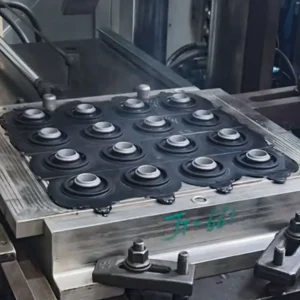
3. Precision Mold Design and Tooling Capability
High-quality molds are critical for dimensional accuracy and batch consistency. Mold design considers rubber flow behavior, venting efficiency, and shrinkage control.
Precision tooling ensures uniform wall thickness and stable geometry, reducing internal stress and improving reliability in high-cycle vibration environments.
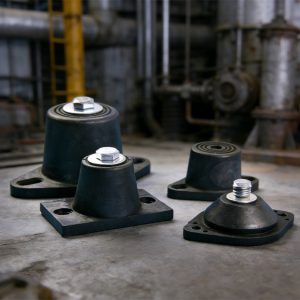
4. Integrated Rubber-to-Metal Solutions
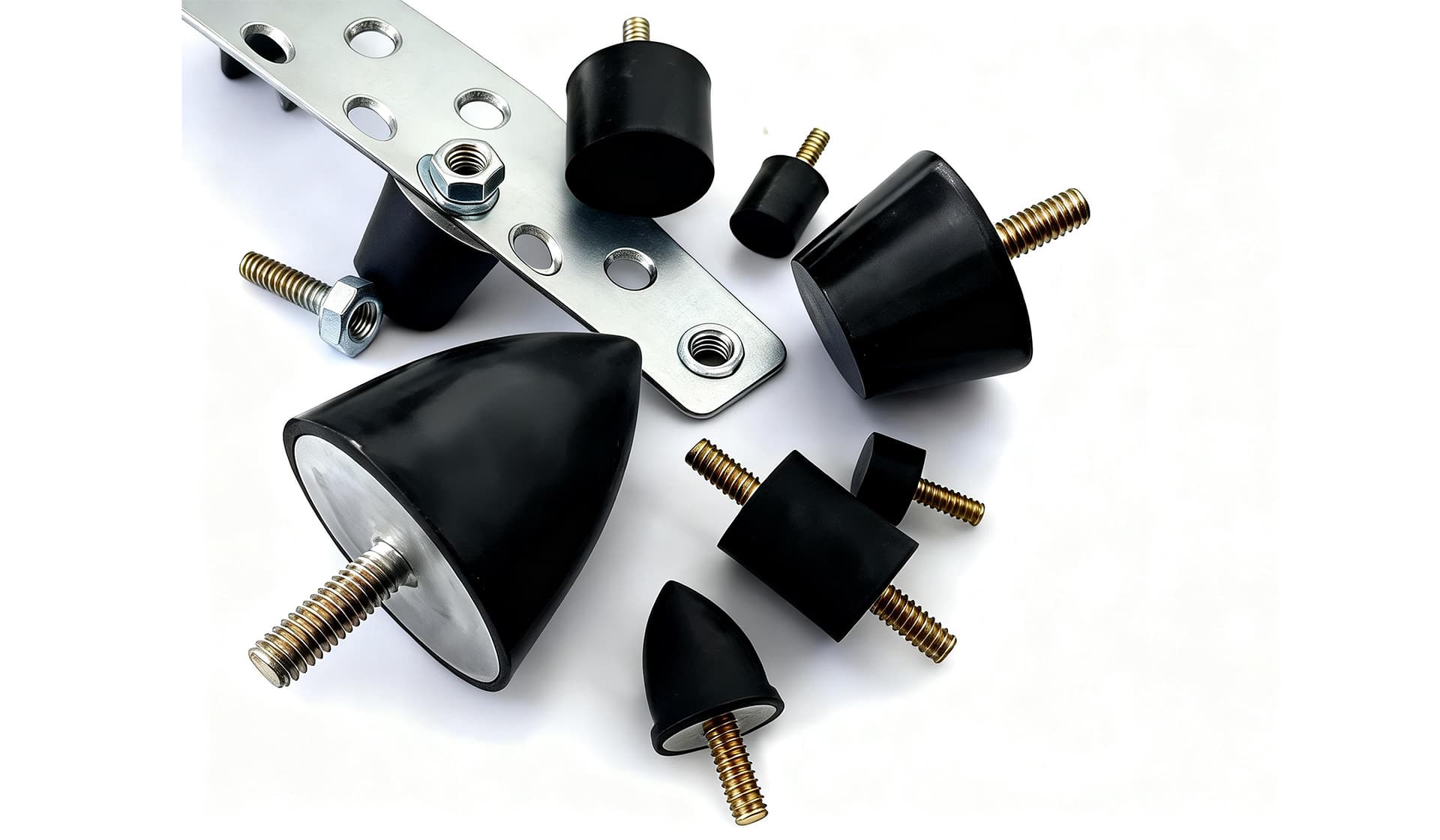
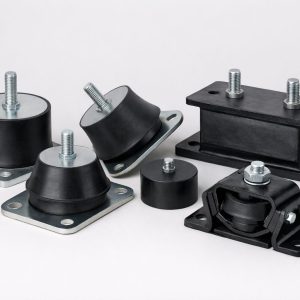
Many industrial applications require rubber parts combined with metal inserts for mounting and load transfer. Proper integration enhances strength without compromising vibration isolation performance.
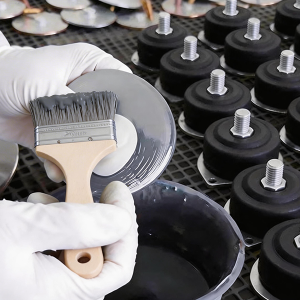
Surface preparation, bonding systems, and controlled vulcanization create strong adhesion between rubber and metal, preventing separation under repeated dynamic loads.
5. Controlled Manufacturing and Vulcanization Process
Vulcanization defines the final performance and reliability of rubber products. Temperature, pressure, and curing time are strictly controlled to achieve precise target properties, including hardness, tensile strength, elasticity, and fatigue resistance. Advanced monitoring systems track these parameters in real time to maintain uniformity.
Consistent process control ensures predictable damping behavior, optimal vibration isolation, and minimal quality variation across production batches, while reducing the risk of premature failure. This meticulous approach guarantees that industrial rubber components perform reliably under heavy loads, high-cycle operation, and long-term service conditions.
6. OEM Customization and Production Flexibility
OEM customers often require customized designs, tight tolerances, and scalable production volumes. A professional OEM rubber parts manufacturer supports design optimization, prototype development, and mass production under one system.
Customization improves vibration isolation efficiency, reduces noise transmission, and extends service life compared to standard catalog components.
7. Quality Control and Performance Validation
Quality assurance is embedded at every production stage. Dimensional inspection, hardness testing, and bonding strength evaluation ensure compliance with technical specifications.
For critical applications, fatigue testing and dynamic load validation confirm real-world performance. This ensures that delivered parts meet international quality and safety standards.

Reviews
There are no reviews yet.