
Natural Rubber vs Synthetic Rubber Engine Mounts: 3 Key Performance Gaps & How to Choose the Right One
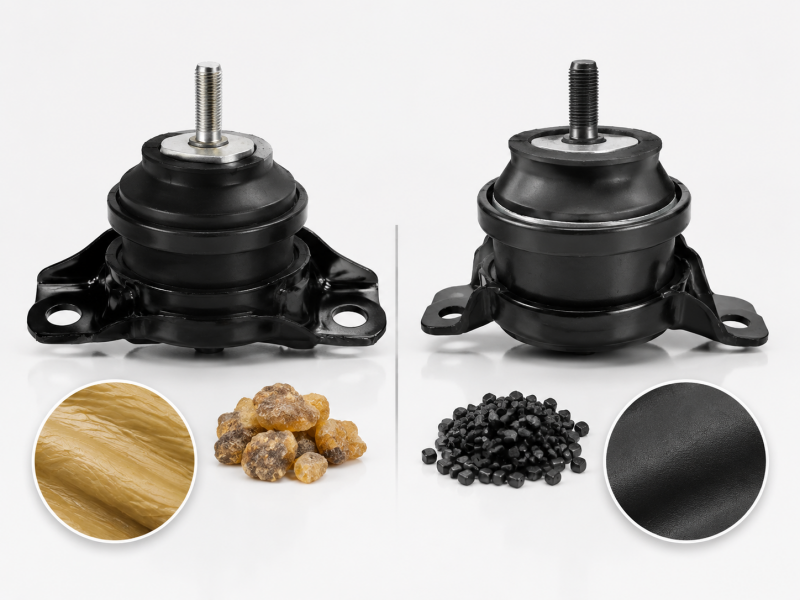
Comparing Natural Rubber Engine Mounts with Styrene-Butadiene Rubber and Nitrile Rubber for Durability & Fit
Brief Description: This guide breaks down the performance differences between natural rubber engine mounts and synthetic options like styrene-butadiene rubber and nitrile rubber, covering aging resistance, elastic buffering, oil resistance, and more to help you choose the best fit for your vehicle.
Natural Rubber Engine Mounts: Superior Comfort with Limited Aging Resistance
When it comes to engine mounts, the choice between natural rubber engine mounts and synthetic alternatives like styrene-butadiene rubber (SBR) or nitrile rubber (NBR) can significantly impact your vehicle’s performance and longevity. Let’s dive into their key differences to guide your selection.
First, natural rubber engine mounts are highly valued for their exceptional elastic buffering capacity, which plays a vital role in absorbing engine vibrations and significantly improving NVH optimization (noise, vibration, and harshness). This natural elasticity allows vibrations to be isolated before they reach the vehicle cabin, resulting in a noticeably smoother and quieter driving experience. Because of this comfort-oriented performance, natural rubber mounts are commonly used in family sedans, passenger cars, and daily commuters where ride smoothness is a top priority.
However, despite their comfort advantages, natural rubber engine mounts have notable limitations in long-term durability. Compared with synthetic rubber alternatives, natural rubber offers weaker aging resistance. Prolonged exposure to UV radiation, high engine bay temperatures, oil contamination, and chemical vapors can accelerate oxidation, causing the material to harden, lose elasticity, or develop surface cracks. In demanding environments or extreme climates, these factors can significantly shorten the service life of natural rubber mounts, often limiting their effective lifespan to approximately 50,000–80,000 miles, especially when maintenance conditions are less than ideal.
Synthetic Rubber Engine Mounts: Cost Efficiency, Chemical Resistance, and Tailored Performance
On the synthetic side, styrene-butadiene rubber (SBR) is widely used for engine mounts that aim to balance cost efficiency with reliable durability. By blending styrene and butadiene, SBR offers improved aging resistance compared to natural rubber while maintaining sufficient flexibility across a broader temperature range. This makes it well-suited for vehicles operating in moderate climates and everyday driving conditions. As a result, SBR engine mounts are commonly found in economy cars and high-volume production models, where cost comparison is critical. Typically priced 10–15% lower than natural rubber options, SBR mounts still deliver comparable elastic buffering for daily use, making them a practical and economical solution.
For more demanding applications, nitrile rubber (NBR) stands out as a high-performance alternative. Its unique chemical structure provides excellent resistance to oils, fuels, coolants, and other automotive fluids, making it an ideal choice for diesel trucks, performance vehicles, and engines prone to leaks or harsh operating conditions. NBR also performs exceptionally well in low-temperature environments, retaining elasticity even in sub-zero climates—an essential advantage for vehicles used in cold regions. However, these benefits come at a higher cost: NBR engine mounts are generally 20–30% more expensive than natural rubber, and their relatively stiffer composition can slightly compromise NVH optimization compared to softer rubber compounds.
Additionally, the vulcanization process plays a critical role in defining the final performance of both natural and synthetic rubber mounts. Natural rubber requires precise curing control to prevent brittleness or premature aging. In contrast, synthetic rubbers such as SBR and NBR allow engineers to fine-tune cross-linking density during vulcanization, enabling targeted performance enhancements—for example, higher cross-linking levels in NBR to further improve oil resistance and long-term durability under extreme conditions.
How to Choose the Right Rubber Engine Mount for Your Vehicle Application
When selecting the appropriate engine mount material, it is essential to consider vehicle compatibility and operating conditions. Natural rubber is best suited for older vehicles or passenger cars that prioritize soft vibration absorption and ride comfort. SBR is a practical option for budget-friendly, moderate-use vehicles where cost efficiency and acceptable durability are key factors. NBR, on the other hand, is ideal for heavy-duty, high-heat, or oil-exposed engines, such as pickup trucks, commercial fleets, and industrial vehicles that operate under demanding conditions.
In summary, natural rubber engine mounts excel in elasticity and affordability for mild environments, while styrene-butadiene rubber and nitrile rubber provide superior durability and specialized performance in harsher conditions. By matching material characteristics to your vehicle’s real-world demands, driving habits, and climate, you can significantly extend mount service life and ensure long-lasting, reliable engine support.