Chassis Bushing: 4 Critical Insights on Materials, Placement, and Function You Need to Know B022
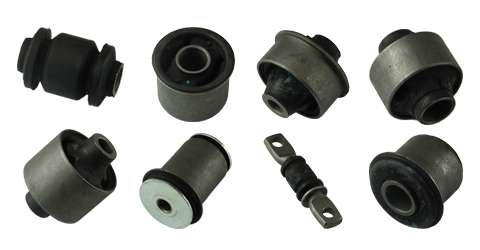
Chassis Bushing: Everything You Need to Know About Materials, Placement, and Function
Discover How Chassis Bushings Impact Ride Comfort, Suspension Performance, and Vehicle Longevity, Including Hardness Selection and Key Locations on Your Car
1. Rubber Hardness for Suspension Bushings
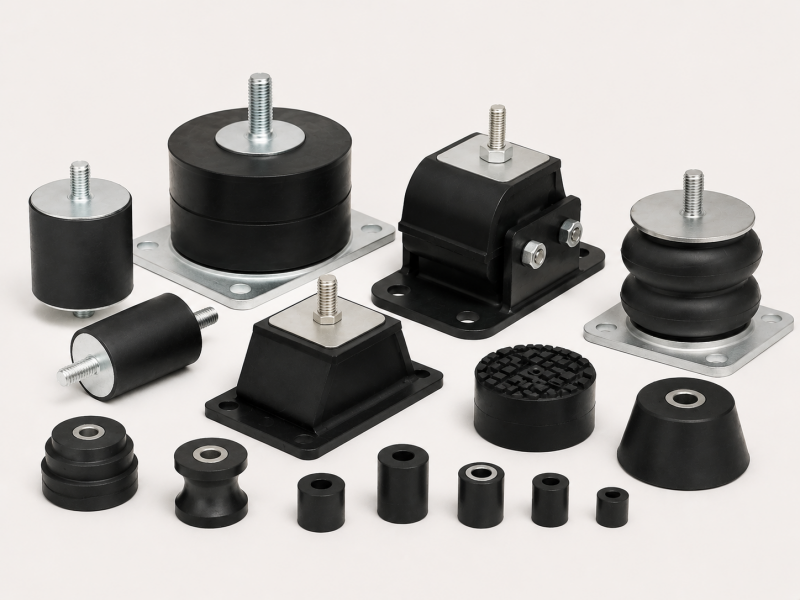
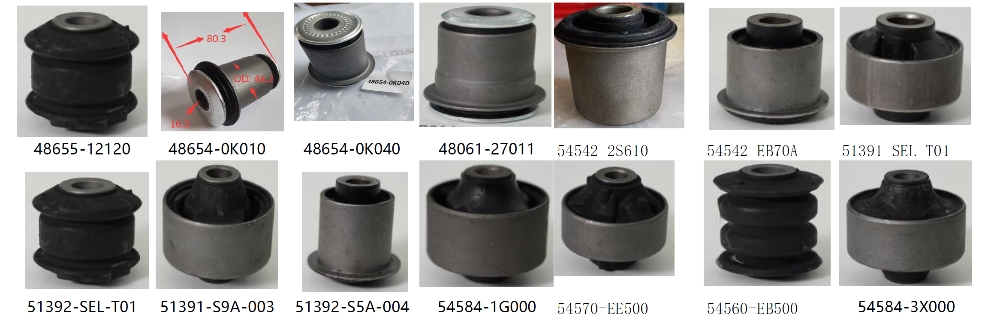
First of all, let’s introduce the rubber used in the connecting parts of original equipment vehicles, ordinary civilian cars, and even some performance models. To ensure optimal ride comfort and vibration isolation, the bushings of these connecting parts are typically made of elastomeric materials such as NR (Natural Rubber), NBR (Nitrile Butadiene Rubber), or similar compounds, providing a balance of flexibility, damping performance, and durability under everyday driving conditions.
In general, to ensure that the front, rear, left, right, up, and down movements of the car are not overly stiff and do not compromise ride comfort during acceleration, deceleration, or cornering, the rubber selected for these bushings is relatively soft. Typically, a Shore hardness of around 50–60 degrees is chosen, providing an optimal balance between flexibility, vibration isolation, and durability, allowing the suspension to absorb shocks effectively while maintaining stable handling characteristics.
Therefore, for some refitted and reinforced bushing products, some hard rubber materials will be selected, and the hardness will be strengthened to about 65-70 degrees, which will fully suppress the original shaking and swing, thereby enhancing the vehicle’s handling and driving experience. These hard rubber bushings will also have different degrees of improvement depending on the design and manufacturer, such as a new all-solid-state design or wrapping some hydraulic oil inside the hard rubber for additional buffering. The main purpose is to obtain enhanced hardness while minimizing the loss of the original driving comfort.
2. Where is Chassis Bushing on A Car?
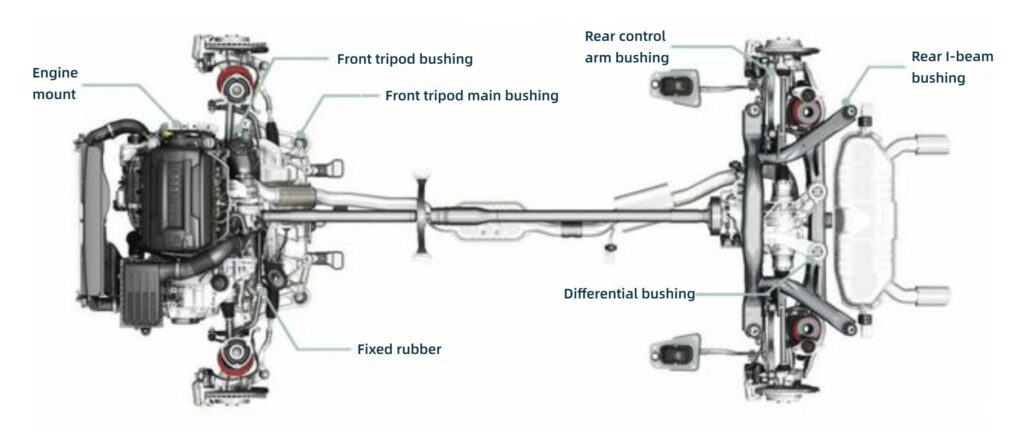
Bushings are critical rubber components strategically placed throughout a vehicle to absorb vibration, reduce noise, and allow controlled movement of suspension and drivetrain parts. Common locations include
- Engine mount, front tripod bushing, front tripod main bushing, fixed rubber mounts, rear control arm bushing, differential bushing, and rear I-beam bushing.
Each bushing is designed to provide flexibility where needed while maintaining structural stability, contributing to ride comfort, handling precision, and overall vehicle durability. Proper selection and maintenance of these bushings are essential to prevent premature wear, reduce vibration, and enhance the vehicle’s performance.
3. What Chassis Bushing Do and Why They Matter in Your Car
- Chassis bushings are critical components of your vehicle’s suspension and drivetrain, connecting moving parts while allowing controlled flexibility. Their main role is to absorb shocks, reduce vibrations, and minimize noise, ensuring a smoother and more comfortable ride for drivers and passengers.
- By allowing slight movement between suspension arms, control arms, and the vehicle frame, bushings help maintain proper wheel alignment and handling stability during acceleration, braking, and cornering. Worn or damaged bushings can lead to clunking noises, uneven tire wear, and reduced vehicle control, affecting both safety and performance.
- Regular inspection and timely replacement of chassis bushings are essential to maximize ride comfort, prolong suspension life, and maintain overall vehicle reliability.
4. High Performance Chassis Bushing Manufacturer
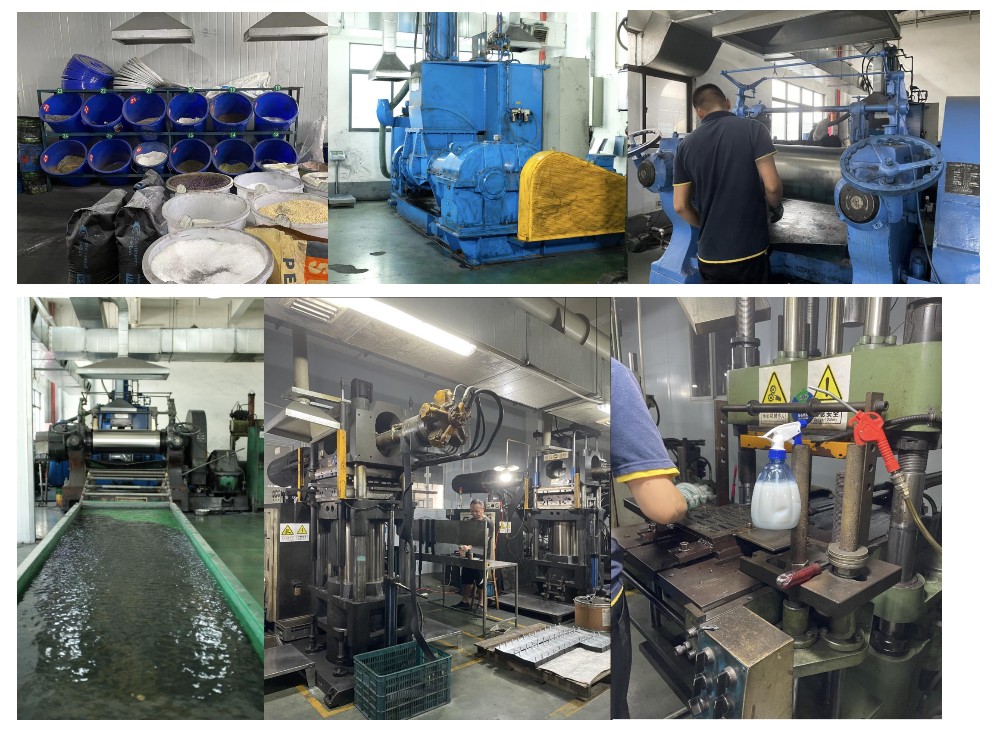
Huizhou Ginotek Co., Ltd. has over 30 years of experience in manufacturing high-quality automotive anti-vibration parts, including control arms, chassis bushings, center bearings, wipers, and more. The company utilizes advanced manufacturing facilities such as rubber mixers, vulcanizers, rubber extruders, rubber injection machines, press vulcanizers, stamping presses, and precision molding equipment. These capabilities enable consistent product quality, high production efficiency, and customization for OEM and aftermarket applications, ensuring that each component meets strict industry standards and customer specifications.

Conclusion
Automotive rubber bushings are essential components in vehicles, providing vibration isolation, noise reduction, and improved ride comfort. Proper rubber material selection, such as NR, NBR, or EPDM, and optimal hardness (Shore A 50–60) ensure suspension bushings, engine mounts, control arm bushings, and differential mounts perform reliably under stress. Regular inspection, cleaning, lubrication, and timely replacement prevent premature failure, reduce downtime, and extend the lifespan of both bushings and the vehicle. Understanding bushing placement and performance helps engineers and maintenance teams optimize vehicle suspension systems, NVH control, and overall durability for safer, smoother driving experiences.