In modern industrial systems, accurate leveling, load distribution, and vibration reduction are essential for equipment performance and operational safety. As a professional rubber custom processing export factory, we specialize in designing and producing high-precision rubber components tailored to global industrial requirements. Among these components, Height Adjusters play a crucial role in structural support, alignment, and vibration isolation across a wide range of applications.
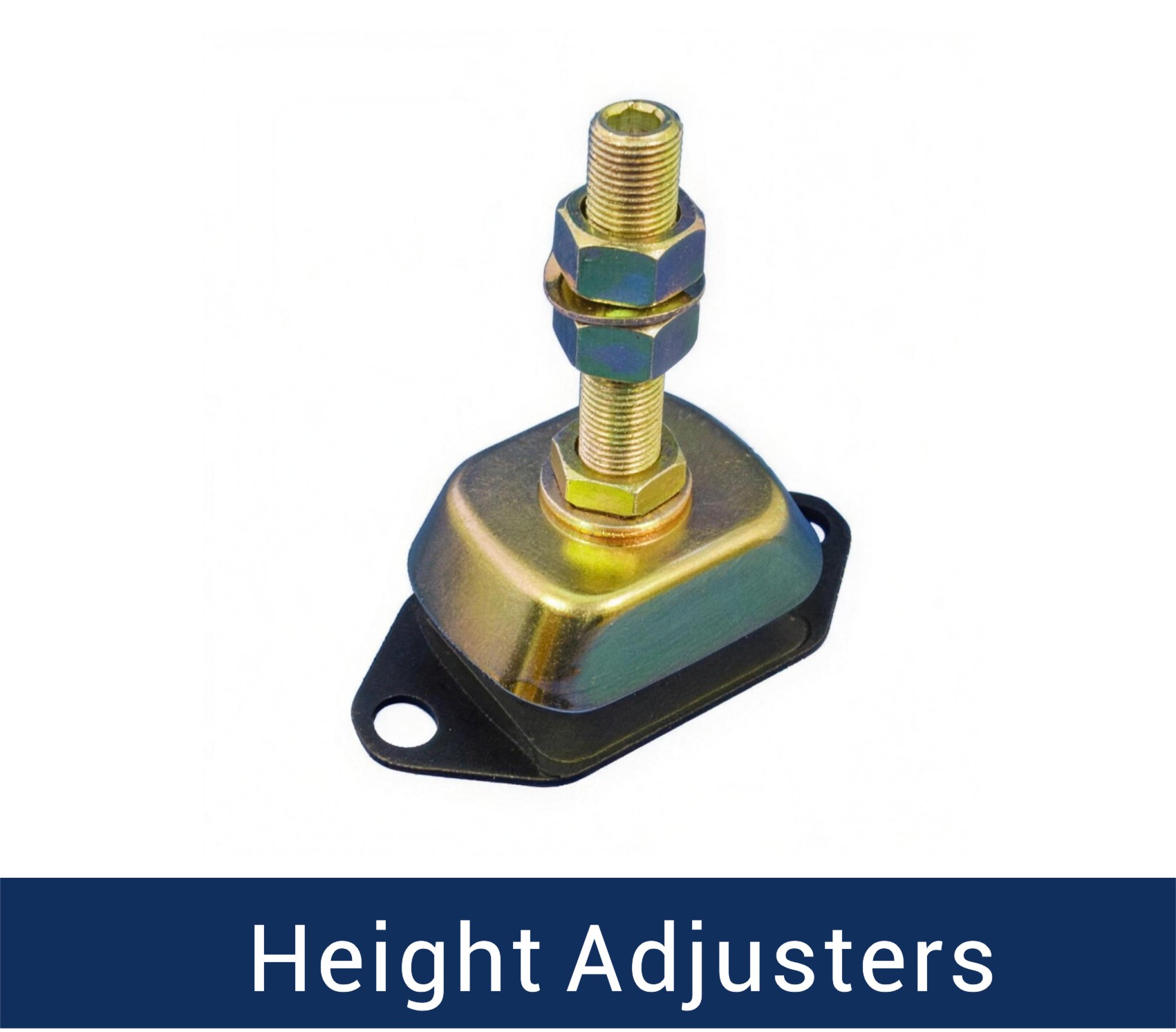
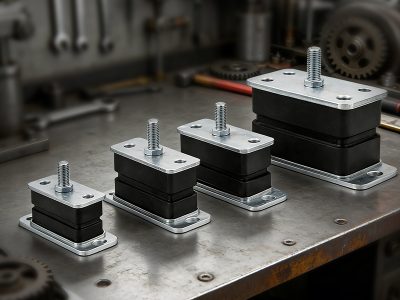
Height adjusters are rubber-metal bonded components designed to provide adjustable support while absorbing vibration and compensating for uneven surfaces. Structurally, they typically consist of a threaded metal insert or stud combined with a molded rubber base. This design allows precise height adjustment while maintaining a stable contact surface that reduces noise and mechanical stress.
The structural design of height adjusters begins with an understanding of load capacity and adjustment range. Engineers must calculate static and dynamic loads to determine rubber hardness, base diameter, and thickness. A properly designed height adjuster distributes weight evenly, preventing localized stress that can lead to premature wear or equipment instability. The rubber element also provides damping, which is especially valuable in machinery subject to continuous vibration.
Material selection is a key factor in height adjuster performance. Different operating environments require specific rubber compounds. Natural rubber is often selected for its excellent elasticity and fatigue resistance. NBR is widely used when oil and grease resistance are required, particularly in industrial machinery. EPDM performs well in outdoor or high-humidity environments due to its resistance to weathering and ozone. For high-temperature or chemically sensitive applications, silicone rubber may be used to ensure long-term stability.
The production process of height adjusters relies on precision molding and reliable rubber-to-metal bonding. Accurate tooling ensures consistent dimensions, which is critical for thread alignment and installation compatibility. During vulcanization, temperature, pressure, and curing time are carefully controlled to achieve optimal rubber properties and strong adhesion between rubber and metal parts. This bonding strength is essential to prevent separation under load or during repeated adjustment.
Customization is one of the most significant advantages of working with an experienced rubber manufacturer. Height adjusters can be tailored in terms of thread size, adjustment range, rubber hardness, base shape, and surface finish. Custom designs allow height adjusters to integrate seamlessly into equipment such as conveyors, cabinets, industrial machinery, medical devices, and HVAC systems. This flexibility helps customers optimize performance while reducing assembly and maintenance time.
Quality control is essential in the production of height adjusters for international markets. Each batch is subjected to rigorous inspection, including dimensional checks, hardness testing, tensile strength evaluation, and load testing. Functional tests may also be performed to verify adjustment smoothness and long-term durability. These measures ensure that height adjusters meet customer specifications and comply with international quality standards.
From a functional perspective, height adjusters contribute to improved equipment stability and longer service life. By compensating for uneven floors and absorbing vibration, they reduce stress on frames, fasteners, and connected components. This leads to lower noise levels, reduced maintenance frequency, and improved operational reliability. In environments where precision alignment is critical, height adjusters provide a simple yet effective solution.
Sustainability and efficiency are increasingly important in modern manufacturing. Optimized height adjuster designs minimize material waste while maintaining mechanical strength and durability. Long service life reduces replacement frequency, supporting cost-effective and environmentally responsible operations. Advanced compound formulation and process control further enhance consistency and performance.
As industrial equipment continues to evolve toward higher precision and reliability, height adjusters remain an essential component in structural design and vibration control. Supported by professional engineering, advanced production techniques, and customization capability, these rubber components deliver dependable performance for global industrial applications.




Reviews
There are no reviews yet.