In industrial equipment and mechanical systems, vibration control and structural stability are critical to long-term performance. As a professional rubber custom processing export factory, we focus on designing and manufacturing high-performance rubber components that meet global industrial standards. Among these solutions, Bell-Mounting products stand out for their unique structure, flexible load handling, and excellent vibration isolation characteristics.
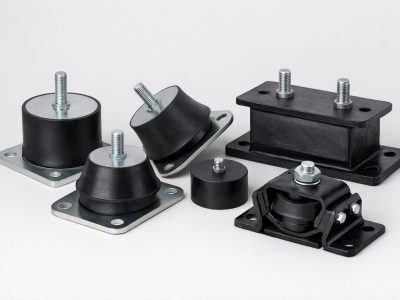
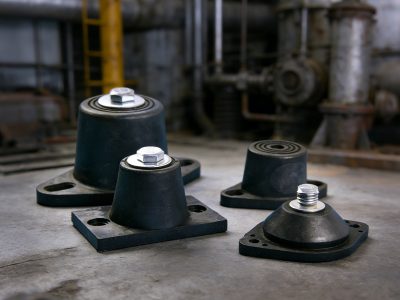
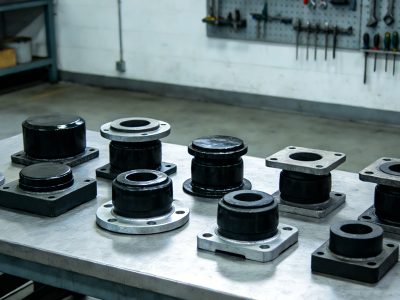
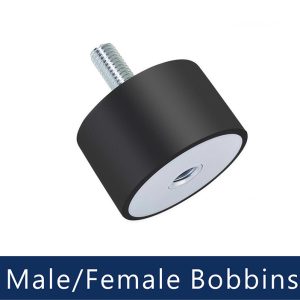
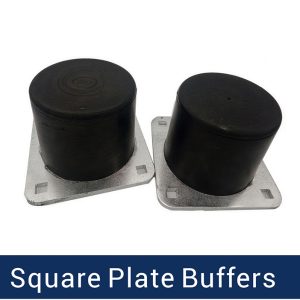
Bell-mounting rubber components are typically designed with a bell-shaped elastomer body bonded to metal inserts. This structural form allows controlled axial and radial movement while maintaining secure positioning. The geometry enables the rubber to deform evenly under load, making it highly effective at absorbing vibration, compensating for misalignment, and reducing transmitted shock in mechanical assemblies.
Structural design is the foundation of reliable bell-mounting performance. Engineers must carefully balance rubber hardness, wall thickness, and bell geometry to achieve the desired spring rate and damping characteristics. Too stiff, and vibration isolation is compromised; too soft, and load-bearing capacity is reduced. Through finite design calculations and prototype testing, the structure is optimized to deliver stability without sacrificing flexibility.
Material selection plays a decisive role in bell-mounting production. Depending on the application environment, different rubber compounds are selected to meet performance requirements. Natural rubber is often used for its excellent elasticity and fatigue resistance. NBR provides strong oil resistance for hydraulic and automotive systems, while EPDM excels in outdoor and weather-exposed applications. Silicone rubber is chosen when high-temperature resistance and long-term flexibility are required.
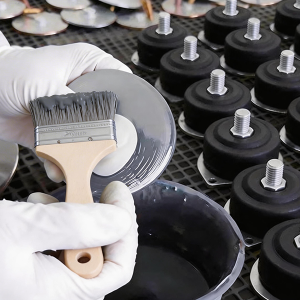
The production process of bell-mounting components involves precision molding and reliable rubber-to-metal bonding. Tooling accuracy directly affects dimensional consistency, which is essential for assembly compatibility. During vulcanization, temperature and pressure are strictly controlled to ensure complete curing and strong adhesion between rubber and metal inserts. Proper bonding prevents separation under dynamic loads and extends product service life.
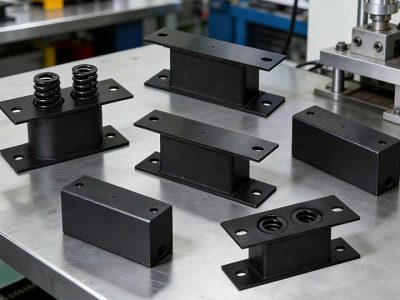
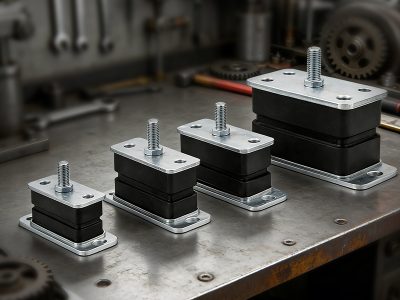
Customization is a major advantage offered by experienced rubber manufacturers. Bell-mounting solutions can be tailored in terms of size, mounting interface, rubber hardness, metal grade, and surface treatment. This flexibility allows the product to be integrated seamlessly into various industrial systems such as compressors, pumps, generators, HVAC units, and heavy machinery. Custom designs also help customers reduce installation time and maintenance complexity.
Quality control is indispensable in bell-mounting manufacturing for export markets. Each production batch undergoes inspections including dimensional checks, hardness testing, tensile strength evaluation, and fatigue testing. Vibration and load simulations may also be conducted to verify real-world performance. These measures ensure that bell-mounting products consistently meet customer specifications and international quality expectations.
From a functional perspective, bell-mounting components improve operational safety and equipment longevity. By isolating vibration and accommodating movement, they reduce stress on bolts, frames, and connected structures. This minimizes noise, prevents metal fatigue, and lowers the risk of unexpected failures. Over time, reduced vibration translates into lower maintenance costs and higher overall system efficiency.
Sustainability and efficiency are increasingly important in modern manufacturing. Optimized bell-mounting designs reduce material waste while maintaining mechanical strength. Long service life means fewer replacements, contributing to more sustainable industrial operations. Advanced compound formulation and process control further enhance consistency and environmental responsibility.
As industries continue to demand higher performance and reliability, bell-mounting rubber components remain a key solution in vibration control and structural design. Backed by professional engineering, precise production, and customization capability, these products support global customers seeking dependable rubber solutions for demanding industrial environments.





Reviews
There are no reviews yet.